

Guide


Sleep and Blood Sugar: What the Research Links and What Supplements Can't Fix
Sleep and blood sugar are linked. In a 2023 NIH-funded trial, healthy women who slept about 90 minutes less each night for six weeks became about 15% more insulin resistant, and up to 20% for postmenopausal women; the effect reversed with normal sleep. Sleep apnea is also common in people with type 2 diabetes. No supplement replaces enough sleep, and some sleep products can affect blood sugar themselves.
On this page
What the research shows
In the trial by Zuraikat and colleagues, 40 women with healthy sleep habits spent six weeks sleeping their usual amount, about 7.5 hours, and six weeks with bedtime delayed to cut sleep to about 6.2 hours. Insulin resistance rose about 14.8% overall and 20.1% in postmenopausal women, largely independent of weight changes, and returned to normal when usual sleep resumed (NHLBI).

Results of a randomized crossover trial in 40 women (Zuraikat et al., Diabetes Care 2023), as reported by NHLBI.
Sleep apnea and diabetes
A 2008 International Diabetes Federation consensus estimated that about 40% of people with obstructive sleep apnea have diabetes and about 40% of people with diabetes have sleep apnea, a link it said is independent of obesity. It recommended screening and treating sleep apnea, noting that treatment can improve blood sugar control (Sleep Review). US diabetes guidance from the National Diabetes Education Program, reported by the American Academy of Sleep Medicine, likewise advises clinicians to ask people with diabetes about sleep apnea symptoms and refer those with symptoms for testing (AASM). If you snore loudly or feel sleepy during the day, ask your doctor whether a sleep study makes sense.
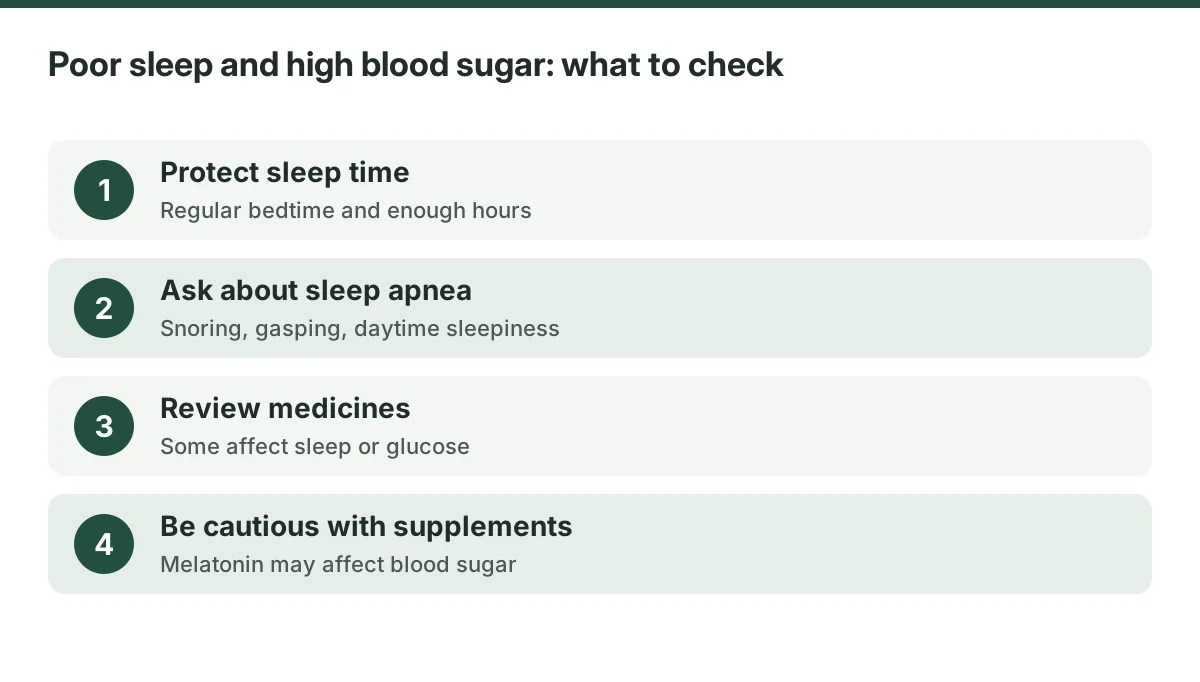
Based on the NHLBI trial report, the IDF consensus on sleep apnea and Mayo Clinic melatonin guidance.
Where supplements fit, and don't
Sleep aids. Melatonin is widely used for sleep, but Mayo Clinic notes it might affect blood sugar and advises people on diabetes medicines to check with their doctor (Mayo Clinic). Elixolve Sleep Oral Strips combine 1 mg of melatonin with valerian and other herbs; our melatonin guide, melatonin products buying guide and sleep supplement interaction checklist cover the cautions.
"Overnight" blood sugar products. Gluconite is a powder marketed around sleep and metabolism, but our review could not find an ingredient panel; its references page mentions ingredients such as melatonin and 5-HTP without confirming they are in the product. With no confirmed formula, there is no way to judge doses or interactions. Our 5-HTP guide explains why 5-HTP needs care with antidepressants.
For blood sugar itself, our blood sugar supplements buying guide and checklist for supplements with diabetes medication cover ingredients and cautions.
What helps
- Keep a regular sleep schedule with enough time in bed.
- Get checked for sleep apnea if you snore loudly or wake unrefreshed.
- Review medicines and supplements with your clinician, especially if you take glucose-lowering drugs.
- Choose evidence over promises: our sleep aid ingredients comparison and jet lag guide explain which sleep products have support.
The existing sleep buying guide and magnesium guide add background, and our sales video guide helps with "melt sugar while you sleep" pitches.
Questions readers ask
Does poor sleep raise blood sugar?
In a 2023 trial, cutting sleep by about 90 minutes for six weeks made women more insulin resistant, and levels returned to normal with usual sleep.
Is sleep apnea linked to diabetes?
Yes. A diabetes federation consensus estimated about 40% of people with diabetes have sleep apnea and recommended screening and treatment.
Can a supplement fix blood sugar while I sleep?
No product has shown that. Enough sleep, treating sleep apnea and prescribed diabetes care matter far more.